
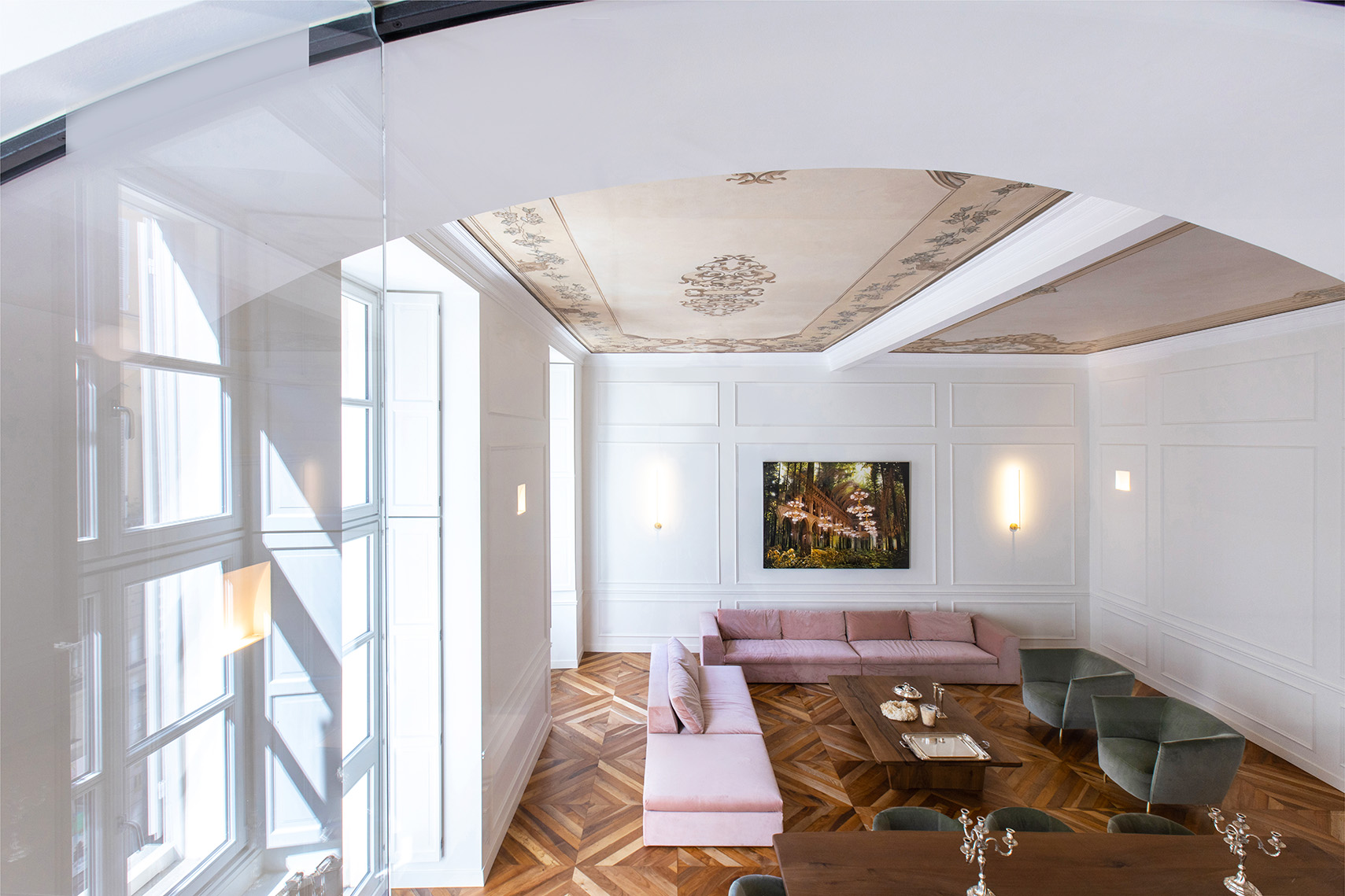
Al piano nobile di un maestoso palazzo di inizio Settecento, 160mq di pura eleganza celano frammenti di un passato in grado di coesistere perfettamente con la storia moderna.
Quanta bellezza si nasconde sotto strati di storia mal raccontata o sotto pagine di moda che a volte cancellano con la loro forza dirompente anche i segni più nobili che il passato ci ha lasciato!?
È accaduto anche in questo spazio abitativo che ora vediamo fiorente e luminoso, ricco di charme, di delicatezza cromatica e stilistica.
L’appartamento, collocato in uno dei palazzi più belli di Torino, è stato in precedenza un ufficio suddiviso in tanti piccoli ambienti stretti e caratterizzati da punti privi di luce per via del dedalo di stanze e corridoi.
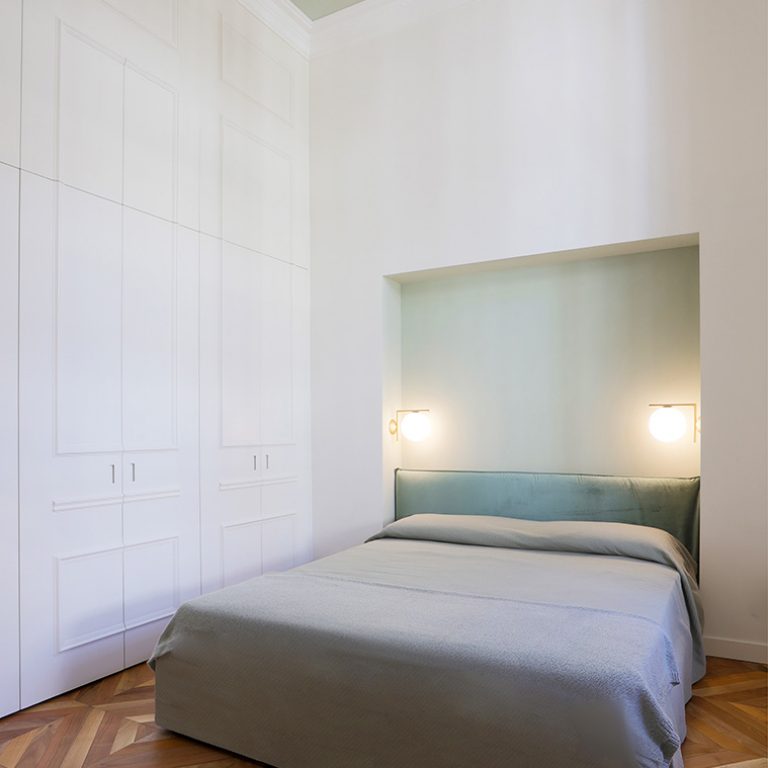
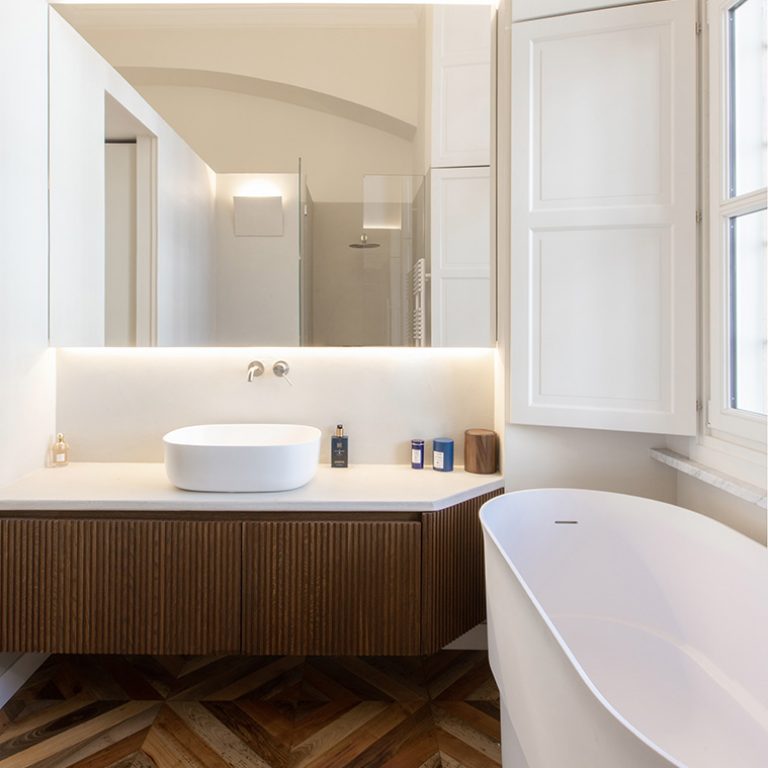
Nell’intervento di ristrutturazione, firmato dallo Studio Officina 8A, la cosa fondamentale è stata quella di eliminare tutto ciò che andava a scontrarsi con la reale forma e dimensione dell’appartamento poiché tutto ciò che lo rendeva unico e “nobile” era stato completamente celato e sacrificato sotto strati di pratica modernità.
I dettagli d’epoca erano stati coperti, così come cornici archi e decori, e il pavimento soffocato da una distesa di moquette: solo una stanza era stata risparmiata e rivelava il pavimento originale.
Non restava altro che far collimare passato e presente creando spazi ottimali in linea con le aspettative della committenza, una coppia con figli già grandi che non vivono più con loro, fondendo la storia pregressa con le comodità moderne, per un nuovo progetto architettonico e di Vita.
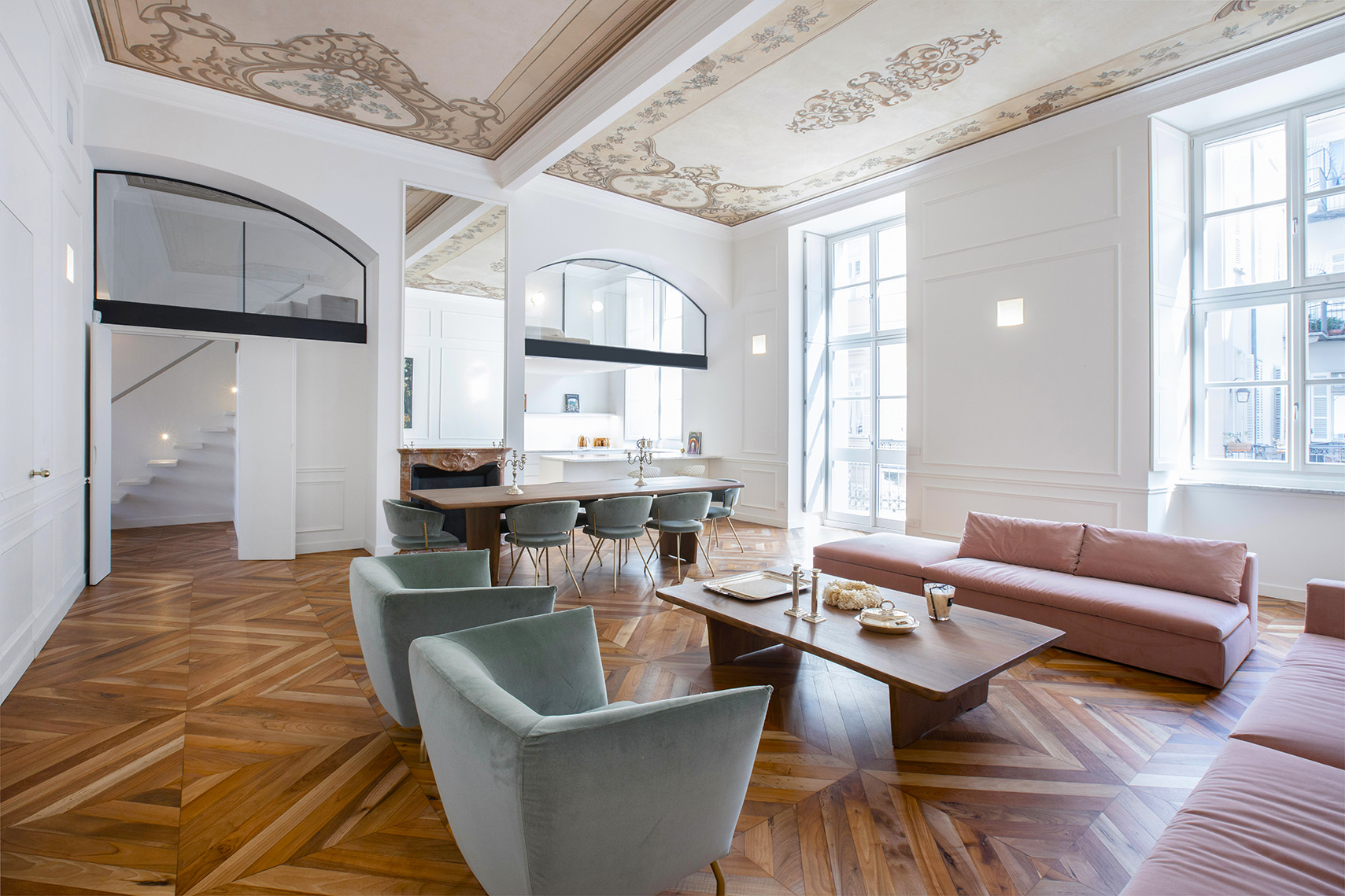
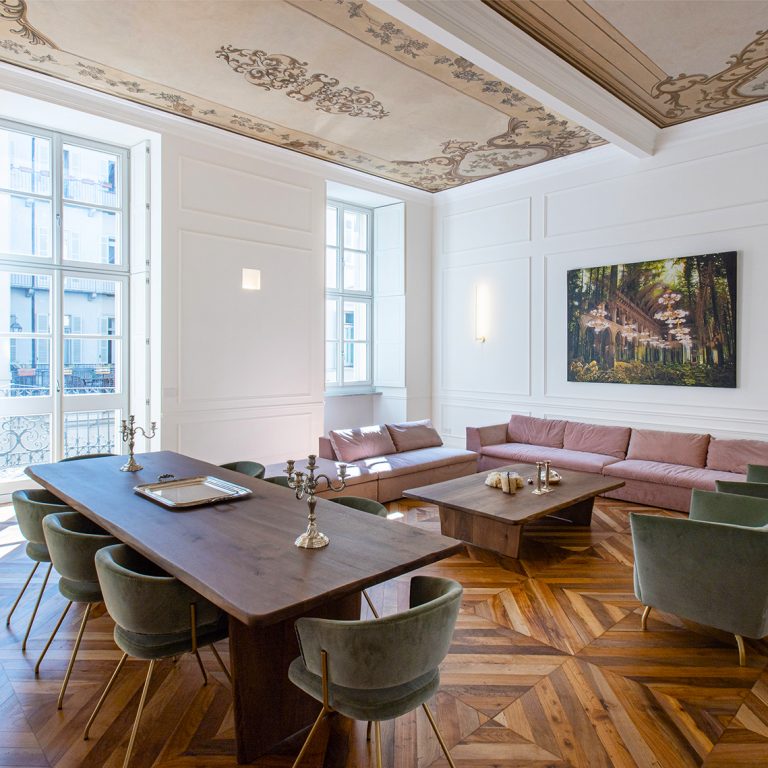
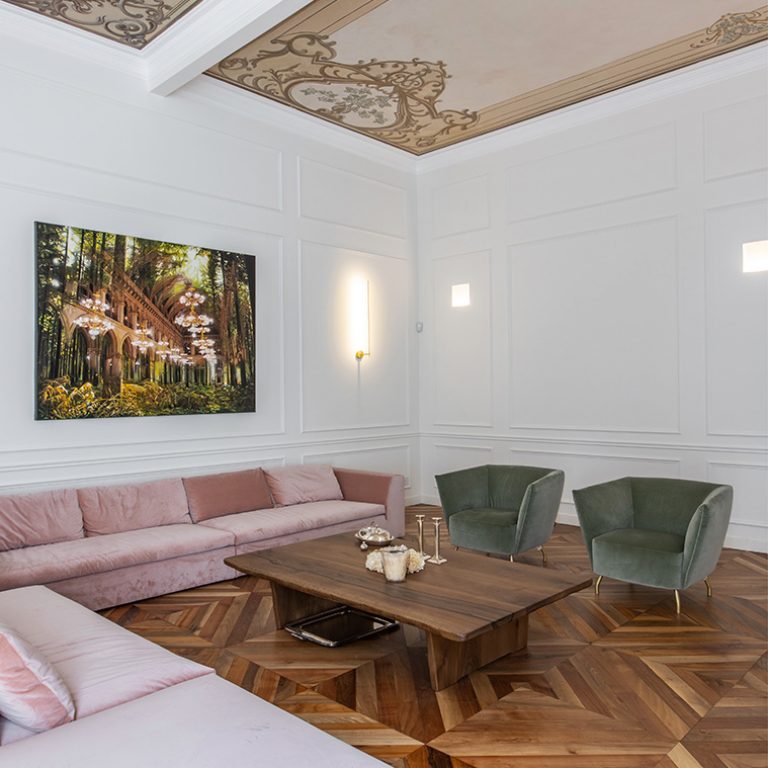
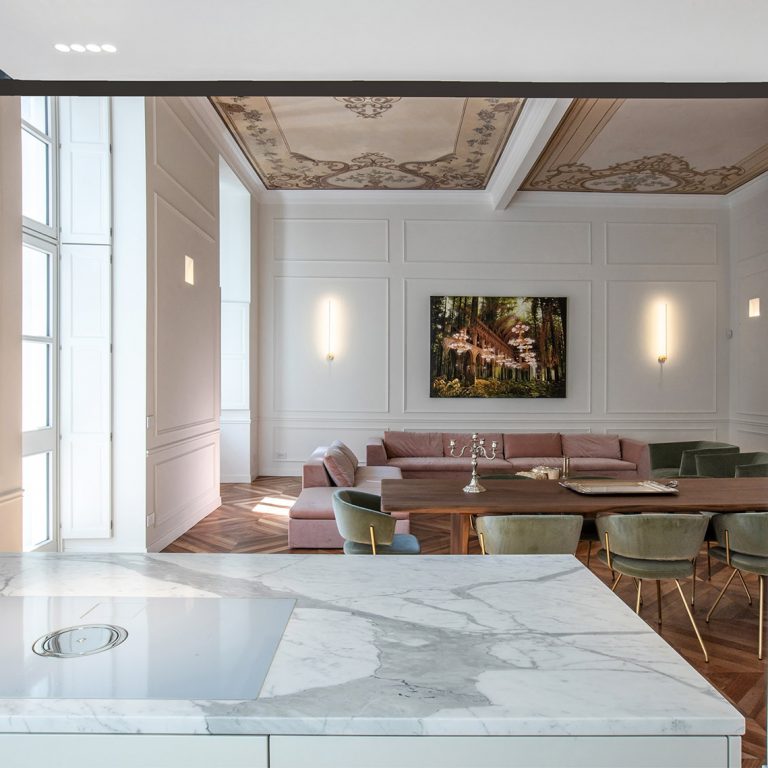
La zona giorno è caratterizzata da grande fluidità, “aperta” con chiusure flessibili. Le cromie delicate utilizzate per gli arredi si abbinano perfettamente agli antichi affreschi che ornano i soffitti creando un raffinato equilibrio stilistico.
Le candide boiserie che vestono le pareti sembrano abbracciare l’intero volume.
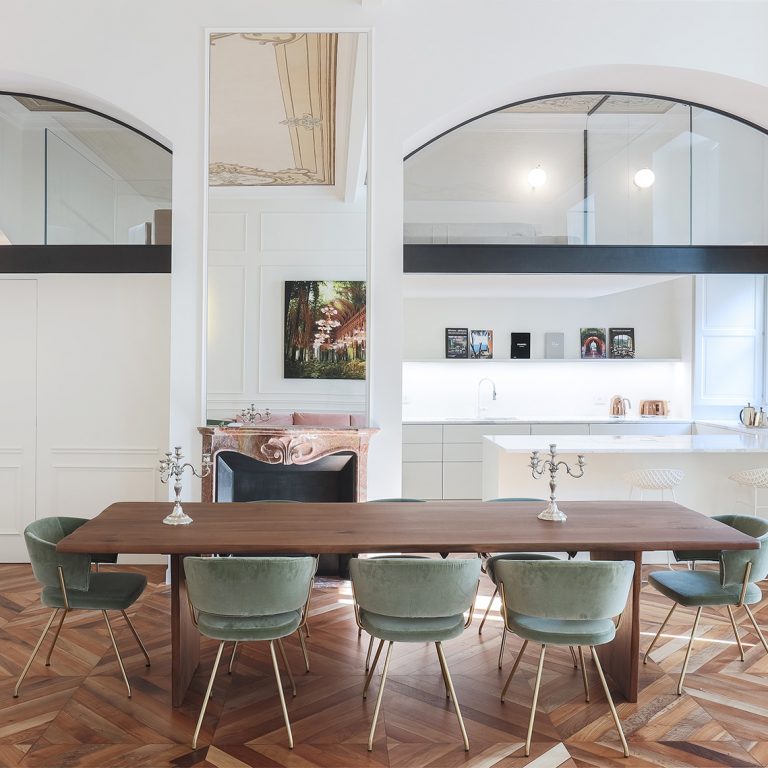
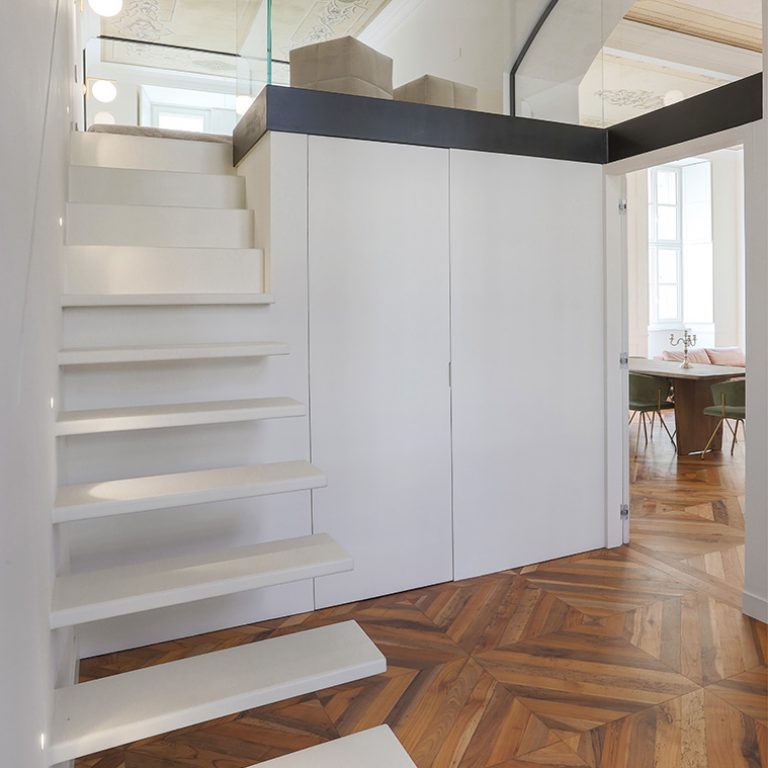
La zona relax soppalcata sbircia sul living attraverso archi vetrati preesistenti, e crea un’ulteriore zona, appartata e ricca di fascino.
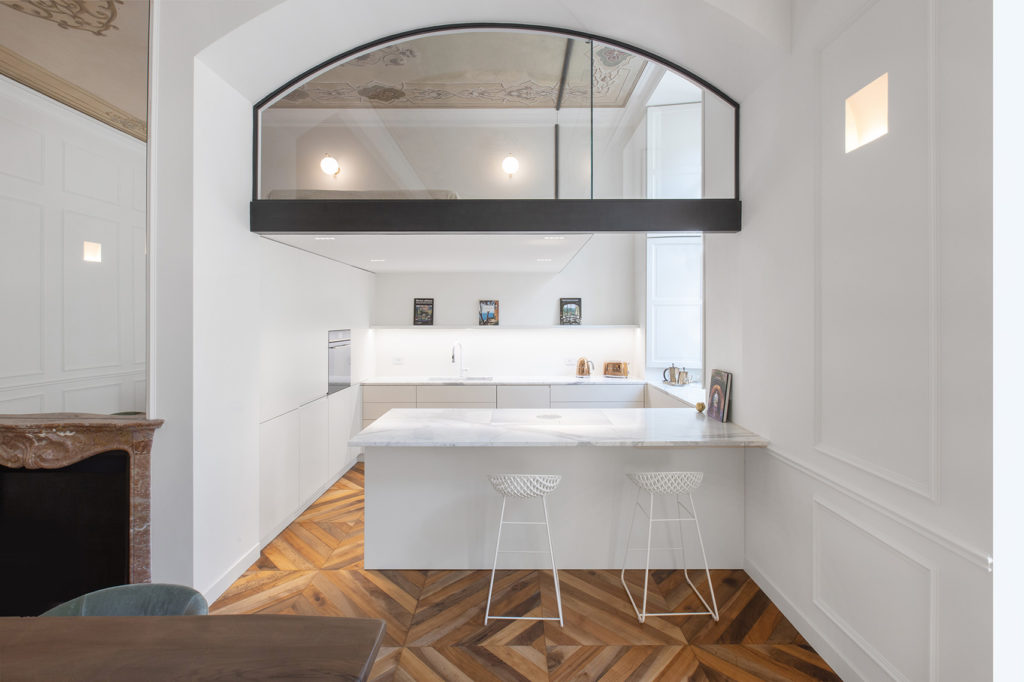
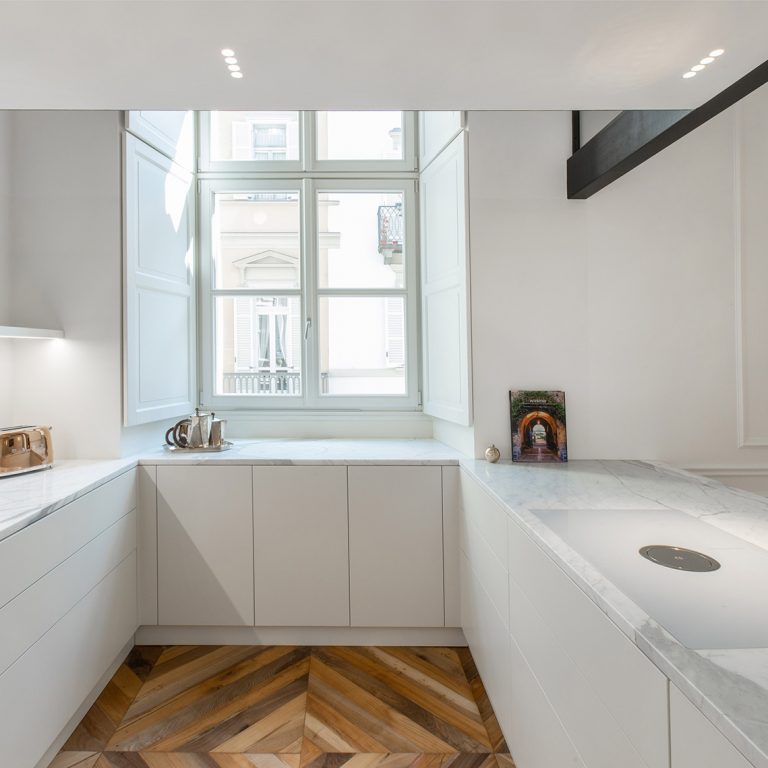
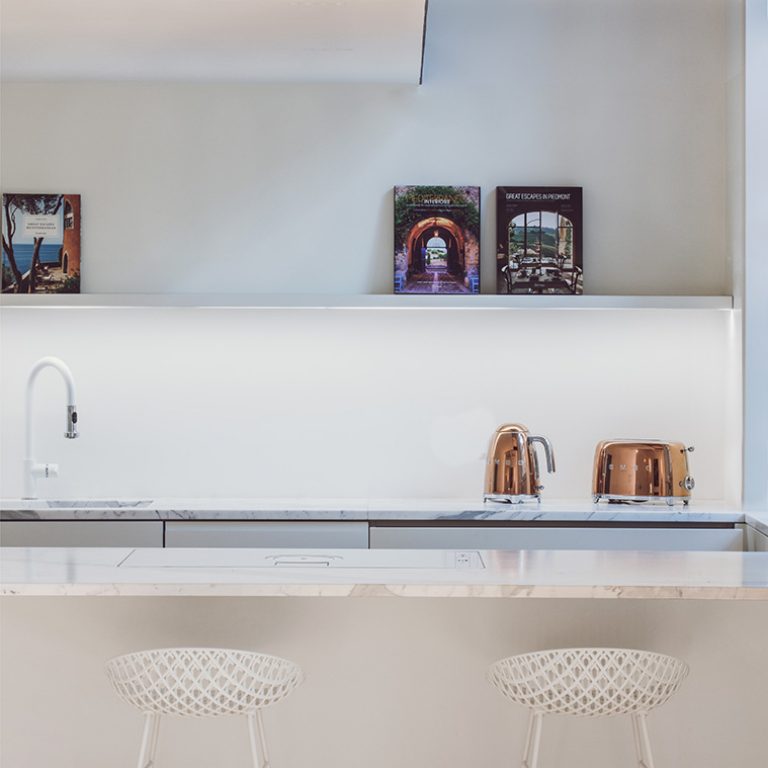
La cucina a vista sottostante il soppalco è stata concepita come un blocco bianco indipendente, contraddistinta da arredi chiari e grande semplicità, in grado di esaltare le caratteristiche del salotto, polo d’attenzione della casa.
Il contrasto cromatico del pavimento in noce regala un vellutato richiamo al passato, essendo stato recuperato e integrato smontando alcuni frammenti di case nobili per avere un materiale coevo con l’epoca dell’immobile.
La scala che serve il soppalco è stata realizzata con gradini a sbalzo, semplici e minimali che si fondono con raffinatezza e discrezione nell’ambiente, enfatizzando le preesistenze piuttosto che aggiungere elementi superflui che possano stonare con il nuovo mood, creato per questo contesto classico e monumentale che dialoga armoniosamente con gli interni, tra affreschi, boiserie e l’antica pavimentazione in legno.
.png)


Seguici su